
The Importance of Healthy Sleep and Preventing Drowsy Driving
Prioritizing healthy sleep is not just about rest — it is a critical part of overall health and safety. When you regularly get proper sleep, your brain functions more effectively. Quality sleep improves focus, decision-making, memory, and reaction time. Without enough rest, judgment can become impaired in ways similar to alcohol use, increasing the risk of accidents, especially when driving, operating machinery, or performing tasks that require attention.
Tips for Better Sleep
- Set your cab temperature to a cool, comfortable range
- Close blackout curtains or use a sleep mask
- Use earplugs or turn on white noise (fan/app)
- Have a comfortable pillow
- Keep bedding and blankets clean
- Avoid screens 20–30 minutes before sleep
- Follow a short wind-down routine such as reading or calming audio
- Avoid caffeine a few hours before bed
Understanding Sleep Apnea
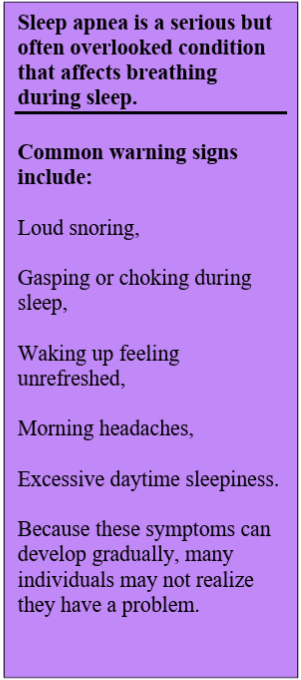
Sleep apnea is a serious but often overlooked condition that affects breathing during sleep. Because symptoms can develop gradually, many individuals may not realize they have a problem.
Common warning signs include:
- Loud snoring
- Gasping or choking during sleep
- Waking up feeling unrefreshed
- Morning headaches
- Excessive daytime sleepiness
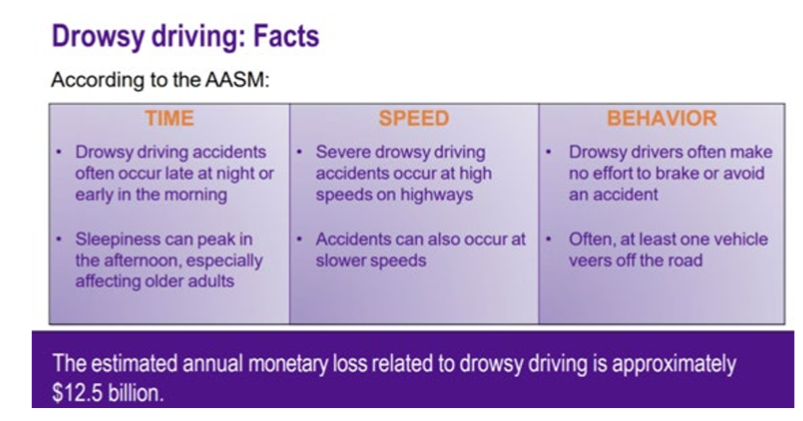
Drowsy Driving Facts
According to the American Academy of Sleep Medicine (AASM), drowsy driving is a significant safety concern.
- Drowsy driving accidents often occur late at night or early in the morning
- Sleepiness can peak in the afternoon, especially affecting older adults
- Severe drowsy driving accidents often occur at high speeds on highways
- Accidents can also occur at slower speeds
- Drowsy drivers often make no effort to brake or avoid an accident
- Often, at least one vehicle veers off the road
The estimated annual monetary loss related to drowsy driving is approximately $12.5 billion. Prioritizing sleep is not only important for personal health, but also for the safety of everyone on the road.